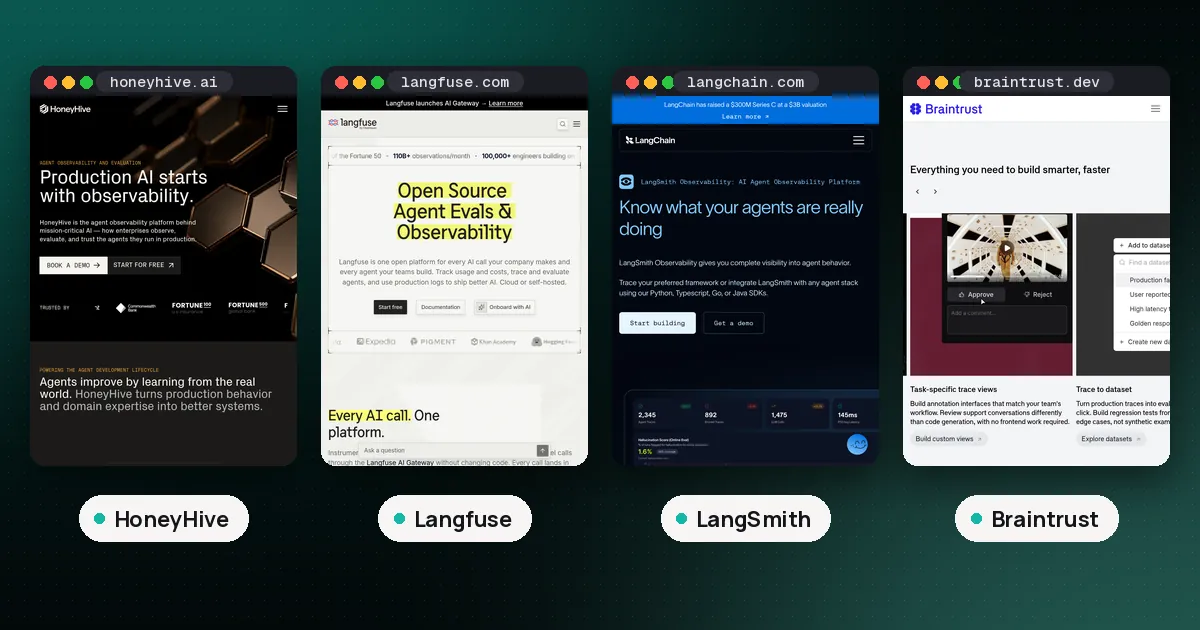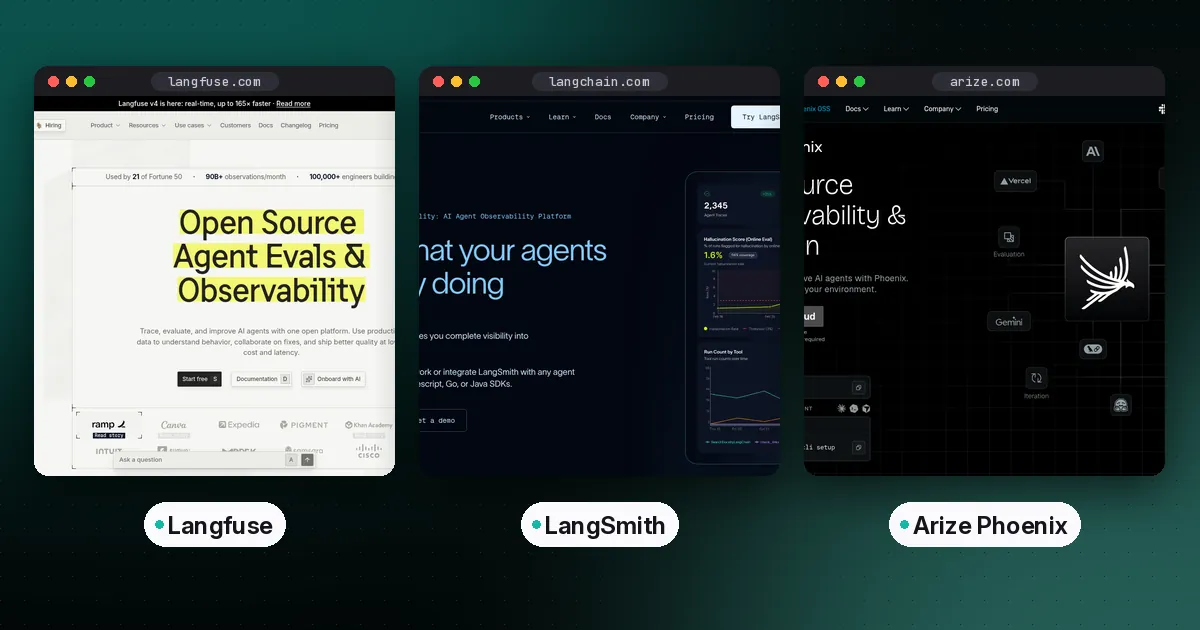
The best LLM observability tools in 2026 are Langfuse for open source, self hosted tracing with prompt management and evals; LangSmith for teams built on LangChain and LangGraph; Arize Phoenix for free, OpenTelemetry native tracing you can run in one container; and Braintrust or W&B Weave if you want a hosted platform centered on experiments. Opik, Laminar and OpenLLMetry are strong open source alternatives. Helicone still works but has been in maintenance mode since its March 2026 acquisition, so it is a weaker pick for new projects.
What's new (November 19, 2026): Weights & Biases now sits inside CoreWeave Forge. Since September 30 the W&B app lives at forge.coreweave.com, and CoreWeave recommends its new Agent Lens, in public preview, for agent tracing, with Weave kept for evaluations and guardrails (CoreWeave docs). HoneyHive now lists public plans, with a free Developer tier and self hosting on Enterprise only. Langfuse added AI Gateway spend budgets per key, per user and per organization on November 19 in v4.83.0 (changelog), and since November 9 it no longer estimates missing token counts (tokenization change).
What is LLM observability?
LLM observability means recording what your AI app does in production: each prompt, response, tool call, latency and token cost, linked together as traces. Teams use it to debug bad answers, catch regressions after a prompt or model change, control spend and feed real examples back into evals. Traditional application monitoring tells you a request took two seconds and returned a 200; LLM observability tells you what the model was asked, which documents were retrieved, which tools were called and whether the answer was any good.
What gets logged: traces, spans, tokens and cost
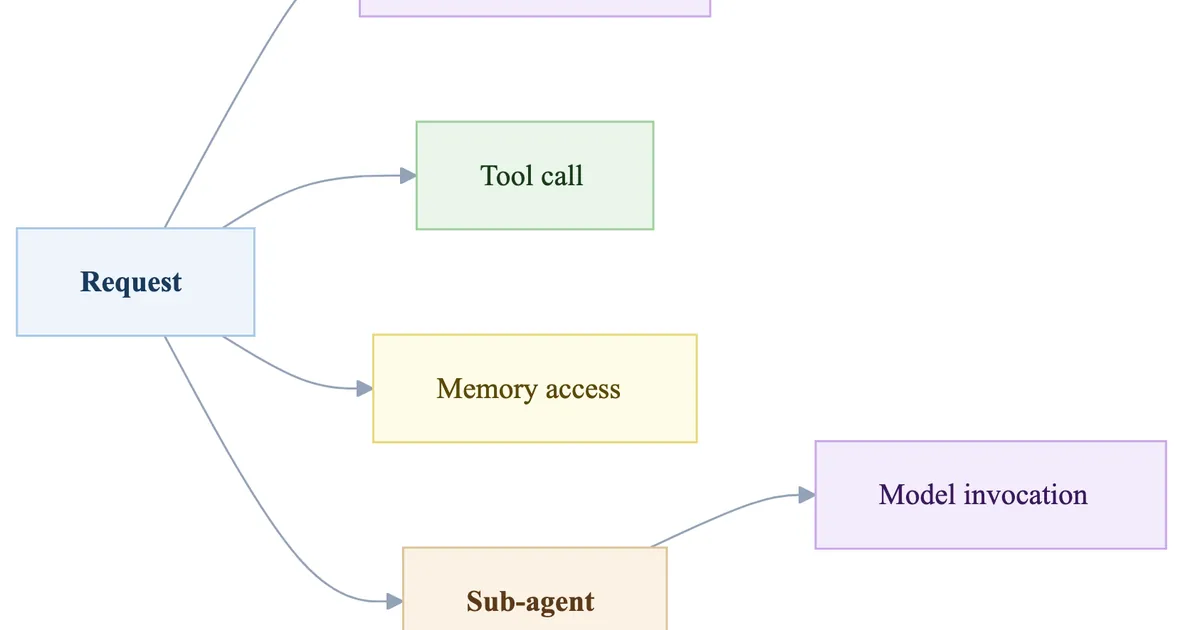
A trace is the record of one request from start to finish. Inside it, each step is a span: a model call, a retrieval, a tool call or a bit of your own code, with its input, output, latency and errors. Model call spans also carry token counts, from which tools compute cost per request, per user or per feature. On top of that raw data, the tools add:
- Sessions and users: grouping traces into conversations, so you can replay what a user experienced.
- Evaluation: attaching scores to traces, from user feedback, code checks or LLM judges, and running experiments on datasets.
- Prompt management: versioning prompts outside your code and linking each trace to the prompt version that produced it.
- Dashboards and alerts: cost, latency, error and quality trends over time.
Observability vs monitoring vs evals
Monitoring answers "is it up and how fast is it?" with aggregate metrics. Observability keeps the full detail of each request so you can ask new questions later, such as "which retrieved document led to this wrong answer?" Evals answer "is it good?" by scoring outputs against a test set or a rubric, before release or on sampled production traffic. In practice the three meet in one loop: traces show you failures, the failures become eval cases, and evals tell you whether a fix worked.
OpenTelemetry and open standards
Most tools now accept OpenTelemetry data, the open standard for traces. The generative AI semantic conventions, which define attribute names for model calls, moved in 2026 to their own repository at open-telemetry/semantic-conventions-genai. Instrumenting with OpenTelemetry, directly or through libraries such as OpenLLMetry, keeps you portable if you switch vendors later.
How to start in a day
- Pick one backend from the table below; a free cloud tier or a single container is enough to start.
- Add the vendor SDK or an OpenTelemetry instrumentation library to the one service that calls the model.
- Tag every trace with a user or session ID and the prompt version, so you can filter later.
- Ship a day of real traffic, then sort traces by cost, latency and negative user feedback.
- Save the ten worst traces as the first rows of an eval dataset.
The full directory of tools is on our observability category page.
LLM observability tools compared
| Tool | License | Self host | Owner (Nov 2026) | Best for |
|---|---|---|---|---|
| Langfuse | MIT core, separate enterprise directories | Yes, free | ClickHouse | Open source default with prompts and evals |
| LangSmith | Proprietary | Enterprise plan only | LangChain | LangChain and LangGraph teams |
| Arize Phoenix | Elastic License 2.0 | Yes, free, single container | Arize, now part of Dynatrace | Simple self hosting, OpenTelemetry native |
| Opik | Apache 2.0 | Yes | Comet | Open source tracing plus evals and optimization |
| W&B Weave | Apache 2.0 SDK; hosted platform | Dedicated Cloud or self managed, via sales | CoreWeave, inside CoreWeave Forge | Teams already on Weights & Biases |
| Laminar | Apache 2.0 | Yes | Independent | Long running agent traces, OpenTelemetry native |
| OpenLLMetry | Apache 2.0 | Instrumentation only | Traceloop, part of ServiceNow | Vendor neutral instrumentation |
| Braintrust | Proprietary; MIT autoevals library | Enterprise hybrid or on prem | Independent | Eval centered hosted platform |
| HoneyHive | Proprietary | Enterprise plan only | Independent | Hosted agent tracing and online evals |
| Helicone | Apache 2.0 | Yes | Mintlify, maintenance mode | Existing users of its gateway |
Langfuse, Phoenix, Opik and Laminar can all be self hosted for free. OpenLLMetry is an instrumentation library that feeds any backend, not a full platform.
The tools in detail
Langfuse
Langfuse is the most widely recommended open source option. It covers tracing, sessions, prompt management, datasets, experiments, human annotation queues and LLM-as-a-judge evaluators, and it is built on OpenTelemetry. ClickHouse acquired it in January 2026; the team says there are no planned licensing changes and self hosting stays first class (announcement).
The tradeoff is operational: a production self host runs PostgreSQL, ClickHouse, Redis or Valkey, and S3 compatible blob storage. Langfuse Cloud has a free Hobby tier with 50,000 billable units a month, and paid plans start at 29 dollars a month (pricing). Since November 2026 Langfuse also offers a proxy route: the Langfuse AI Gateway, in beta, records model calls from coding agents and apps without SDK changes.
LangSmith
LangSmith, from the LangChain team, gives the tightest integration with LangChain and LangGraph, where tracing can be switched on with environment variables. It includes evals, prompt tooling and deployment features. The Developer plan is free for one seat with 5,000 base traces a month; Plus is 39 dollars per seat per month with 10,000 base traces, and self hosting or hybrid deployment requires the Enterprise plan (pricing). We compare it head to head in Langfuse vs LangSmith, and is the LangSmith API free covers the free plan limits.
Arize Phoenix
Arize Phoenix is free to self host with no usage limits or feature gates and runs as a single Docker container. It uses OpenTelemetry and Arize's OpenInference conventions and includes evals, datasets, experiments and prompt tooling. Its license is the Elastic License 2.0, which is source available rather than an OSI approved open source license; that matters mainly if you plan to offer Phoenix as a hosted service. Dynatrace completed its acquisition of Arize on October 1, 2026, and says it will keep supporting Phoenix (press release). See our Langfuse vs Arize Phoenix comparison for a detailed look at self hosting both.
Opik
Opik, from Comet, is Apache 2.0 licensed and self hostable. It records LLM calls, tool calls and agent steps, scores them with built in and custom metrics, and adds prompt optimization features. Comet remains independent. Free Cloud includes 25,000 spans a month for up to 10 team members, and Pro Cloud is 19 dollars a month for 100,000 spans (Comet pricing).
W&B Weave
W&B Weave is the LLM tracing and evaluation product of Weights & Biases, which CoreWeave owns. Since September 30, 2026 the W&B app runs inside CoreWeave Forge: project links moved from wandb.ai to forge.coreweave.com/wandb, old links redirect and api.wandb.ai still works, so existing SDK code needs no change (CoreWeave migration notes). The same team now builds Agent Lens, an OpenTelemetry based agent tracing product in public preview that reads the same trace data as Weave. CoreWeave recommends Agent Lens for agent tracing, while Weave still covers evaluations, function level traces and guardrails. Forge Free includes 1 GB of Weave data ingestion a month and Pro starts at 60 dollars a month (pricing). It fits teams that already track training runs in W&B.
Laminar and OpenLLMetry
Laminar is an Apache 2.0, OpenTelemetry native platform aimed at agents that run for hundreds of steps, with session replay for browser agents and full text search across traces. Its Free plan includes 1 GB of data with 7 days of access, and Pro is 30 dollars a month with 3 GB (Laminar pricing). OpenLLMetry is not a dashboard but a set of OpenTelemetry instrumentations for model providers and frameworks; it can send traces to Langfuse, Phoenix, Datadog or any OTLP backend. Our OpenLLMetry vs Langfuse guide shows how the two layers fit together. Traceloop, its maker, joined ServiceNow in March 2026 and says OpenLLMetry will remain open source (Traceloop blog).
Braintrust and HoneyHive
Braintrust is a hosted platform built around evaluation: datasets, experiments, scorers and production logging. It has a free Starter tier and a Pro plan listed at 249 dollars a month (pricing). HoneyHive offers hosted tracing, online evaluations, monitoring, alerts and annotation queues for agent applications. Its free Developer plan covers 10,000 events a month (an event is one trace span or metric), up to 5 users and 30 days of retention. Enterprise is custom priced and is the only plan with self hosted, hybrid or single tenant deployment (HoneyHive pricing). Our HoneyHive vs Langfuse comparison puts the two side by side.
Helicone
Helicone pioneered the one line proxy approach: route model calls through its gateway and get logging, cost tracking and caching. Mintlify acquired it in March 2026, and Mintlify says the service stays live in maintenance mode with security updates, bug fixes and new models, and that it will help customers move to another platform (Mintlify announcement). Existing users are fine for now; new projects should prefer an actively developed tool. Our Helicone vs Langfuse comparison covers pricing, gateway features and a migration plan.
Free tiers and entry prices (November 2026)
| Tool | Free cloud tier | First paid plan |
|---|---|---|
| Langfuse | 50,000 units a month, 30 days, 2 users | Core, $29 a month |
| LangSmith | 5,000 base traces a month, 1 seat | Plus, $39 per seat a month |
| Opik | 25,000 spans a month, 60 days, 10 members | Pro Cloud, $19 a month |
| HoneyHive | 10,000 events a month, 30 days, 5 users | Enterprise, custom |
| Braintrust | 1 GB processed data and 10,000 scores, 14 days | Pro, $249 a month |
| Laminar | 1 GB of data, 7 days, 1 seat | Pro, $30 a month |
| W&B Weave (Forge) | 1 GB of Weave ingestion a month | Pro, from $60 a month |
The units do not match. A Langfuse unit is a trace, observation or score, a HoneyHive event is a span or metric, LangSmith counts traces, and Braintrust, Laminar and Forge meter data volume. Run a day of real traffic through your shortlist before you compare bills. Self hosted Phoenix and the open source editions of Langfuse, Opik and Laminar have no vendor usage cap; you pay only for your own servers.
How to choose
- Decide where data may live. If traces cannot leave your infrastructure, shortlist Langfuse, Phoenix, Opik or Laminar, or budget for an enterprise self host of a hosted product.
- Match your framework. Heavy LangChain or LangGraph users get the smoothest start with LangSmith; everyone else should favor OpenTelemetry based tools.
- Decide how central evaluation is. If experiments and CI gates are the main job, look hard at Braintrust, Langfuse or Phoenix, and read our playbook on how to evaluate LLM apps.
- Price your real volume. Billing units differ between vendors (see the table above), so estimate with your own traffic.
- Check ownership and license. After the 2026 acquisitions, confirm the license, the roadmap commitment and the migration path before you commit.
Who each tool is for
Langfuse suits most teams that want one open source platform for traces, prompts and evals. LangSmith suits LangChain centric teams that prefer a managed product. Phoenix suits teams who want the lightest free self host. Opik and Laminar suit teams who want open source from an independent vendor. Braintrust suits eval driven teams happy with a hosted product. If you mainly need retrieval quality metrics, pair any of these with the libraries in our RAG evaluation metrics guide, and use the LLM-as-a-judge guide to set up trustworthy automated scores. For multistep agent loops, read AI agent observability.
FAQ
What are the best open source LLM observability tools?
Langfuse, which has an MIT licensed core, Opik and Laminar, both Apache 2.0, are fully open source and self hostable. Arize Phoenix is free to self host but uses the source available Elastic License 2.0. OpenLLMetry provides open source OpenTelemetry instrumentation that feeds any backend.
Is Langfuse free?
Yes, if you self host it: the open source core is free with no usage limits. Langfuse Cloud also has a free Hobby plan with 50,000 units a month and two users; paid cloud plans start at 29 dollars a month. For license and terms details, see is Langfuse free for commercial use.
Does Datadog have LLM observability?
Yes. Datadog's LLM Observability product now appears as Agent Observability in its documentation, and it bills on LLM spans, meaning calls to a model provider, rather than on every span in a workflow (Datadog docs). It suits teams that want LLM traces next to existing infrastructure and APM data. For cost math against an open source option, see Datadog LLM Observability vs Langfuse.
Do I need OpenTelemetry for LLM tracing?
Not strictly, since most tools have their own SDKs, but instrumenting with OpenTelemetry keeps your traces portable between vendors. Langfuse, Phoenix, Laminar and OpenLLMetry are all built around it.
Which LLM observability tool has the biggest free tier?
On hosted plans, Langfuse Hobby (50,000 units a month) and Opik Free Cloud (25,000 spans, up to 10 members) give the most room by their own counts, while LangSmith Developer stops at 5,000 base traces and one seat. The units differ, so test with your own traffic.